➜ Lawn Care
LAWN CARE IN Ballston Lake, NY
Cool-season lawns in this region do almost all of their growing in two short windows, spring and early fall, and very little in the heat of July. Countryside Lawncare builds a season around that rhythm: mowing on a set schedule, trimming and edging every visit, debris cleared as it falls, spring and fall cleanups, and winter plowing. Every visit is pay-as-you-go, priced after a free walk-through, and backed by 12 years of work on Ballston Lake, NY properties.

A LAWN IS A YEAR-LONG JOB, NOT A SUMMER ONE.
Homeowners often hire out the mowing and keep the rest, then find the yard still looks unfinished. The reason is that turf responds to what happens across 12 months, not three. Leaves left down in November decide what April looks like. A driveway plowed badly in January leaves torn edges to repair in May.
Handing the whole calendar to one company closes those gaps. The same people who cut your grass are the ones clearing it in October and plowing it in February.
- One schedule from first cut to last plow
- Weekly or biweekly mowing, your call
- Seasonal cleanups booked ahead of the weather
- Free estimate, no contract, no obligation
➜ LAWN CARE
SARATOGA COUNTY YARDS ASK FOR MORE THAN A MOWER.
Lots around Ballston Lake tend to be generous, wooded at the edges, and rarely flat. That produces a yard where the sunny middle grows twice as fast as the shaded back corner, where sticks come down after every storm, and where the strip along the road bakes out by August. One cutting height across all of it leaves a lawn looking patchy no matter how often it is mowed.
LAKESIDE LOTS COME WITH RULES WE ALREADY FOLLOW.
New York restricts lawn fertilizer within 20 feet of a waterbody unless a 10-foot vegetated buffer stays in place, and it bans phosphorus on established lawns outright. Properties near the lake and the creeks feeding it sit squarely inside those rules. We keep clippings and debris out of the water, sweep hard surfaces rather than rinsing them, and work the shoreline edge carefully.
WE HAVE WATCHED THESE LAWNS THROUGH EVERY KIND OF SPRING.
Some years the frost holds into the third week of May and the first cut waits. Others the grass is ankle deep by the last week of April. After 12 years on the same roads, we know which yards run ahead of the calendar and which ones lag, and we build the route around that rather than a fixed start date. Your first visit lands when the lawn is ready.
WHY CHOOSE US FOR LAWN CARE.
ONE COMPANY, EVERY SEASON
Mowing, upkeep, cleanups, and plowing come from the same people on the same schedule. Nobody hands off in October, nobody has to be re-taught your property in December, and there is one place to call when something needs adjusting.
NOTHING TO SIGN
Service runs visit by visit. No season-long agreement, no prepayment, no minimum number of cuts, and no cancellation fee if your plans change halfway through July. You keep the leverage that most lawn agreements quietly take away.
A SCHEDULE YOU CONTROL
Weekly during heavy growth, biweekly when things slow, skipped entirely during a drought when the grass is not moving. The rhythm bends to the season and to what you want to spend, and changing it takes one message rather than a renegotiation.
YOUR WEEKENDS BACK
More than 20 mowing mornings, the trimming, the edging, the cleanup, the fuel runs. All of it disappears off your calendar and reappears as time you get to spend somewhere other than behind a machine.
CURB APPEAL THAT HOLDS
A yard that is cut, trimmed, and edged on a rhythm never has the ragged week that undoes the previous month. Property value, neighborhood standing, and simple daily satisfaction all trace back to that consistency.
A NUMBER BEFORE THE WORK
The estimate comes first, at no charge, and only after the lot has actually been walked rather than measured off a satellite image. You know what a season costs before anybody starts an engine in your driveway.
➜ WHAT WE HANDLE
OUR LAWN CARE WORK
Six pieces make up a full-season plan. Most customers take all of them, some take two, and the mix can change as the property or the year changes without renegotiating anything.
WEEKLY VISITS
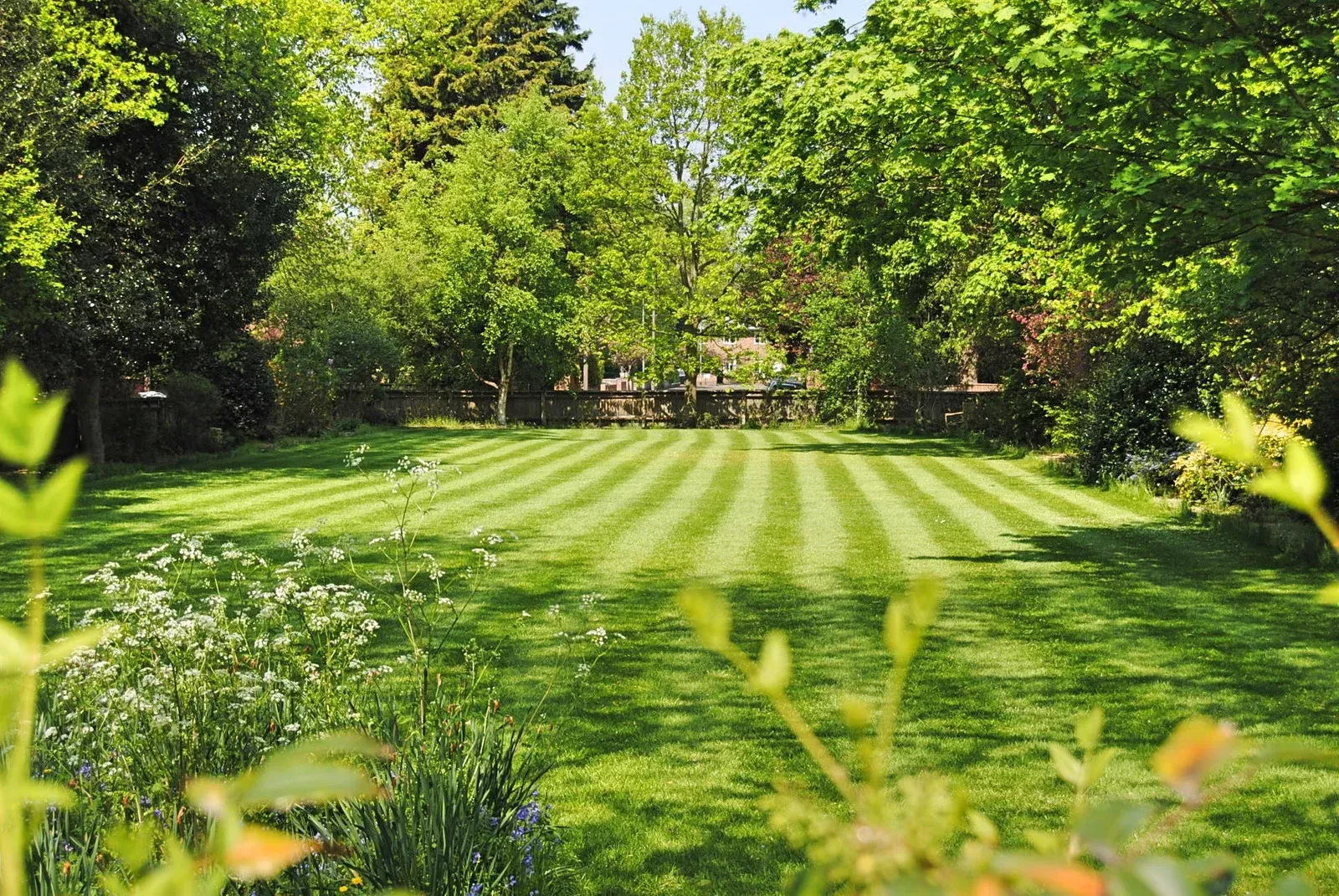
Weekly Mowing Rounds
The default through May, June and September, when cool-season grass puts on most of its yearly growth. A seven-day gap keeps each cut inside the one-third rule, which means the lawn is never stressed by a single aggressive pass and color stays even across the whole lot.
BIWEEKLY OPTION
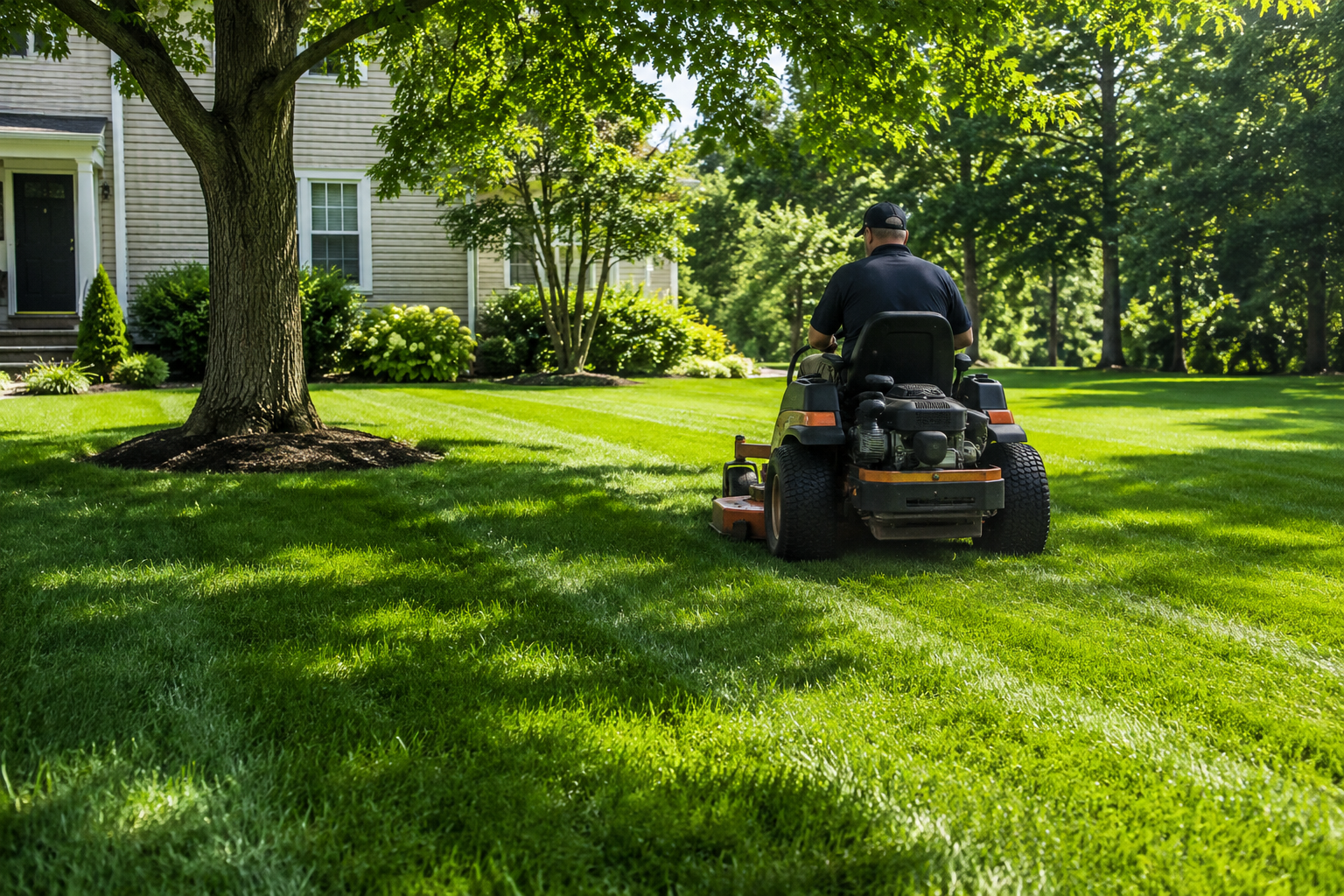
Biweekly Service Schedules
Suited to slower-growing lawns, shaded properties, and the mid-summer stretch when heat pushes turf toward dormancy. Intervals of 14 days cost less across a season and still keep a yard tidy, provided the height is set correctly and nobody tries to take too much off at once.
CLEAN LINES
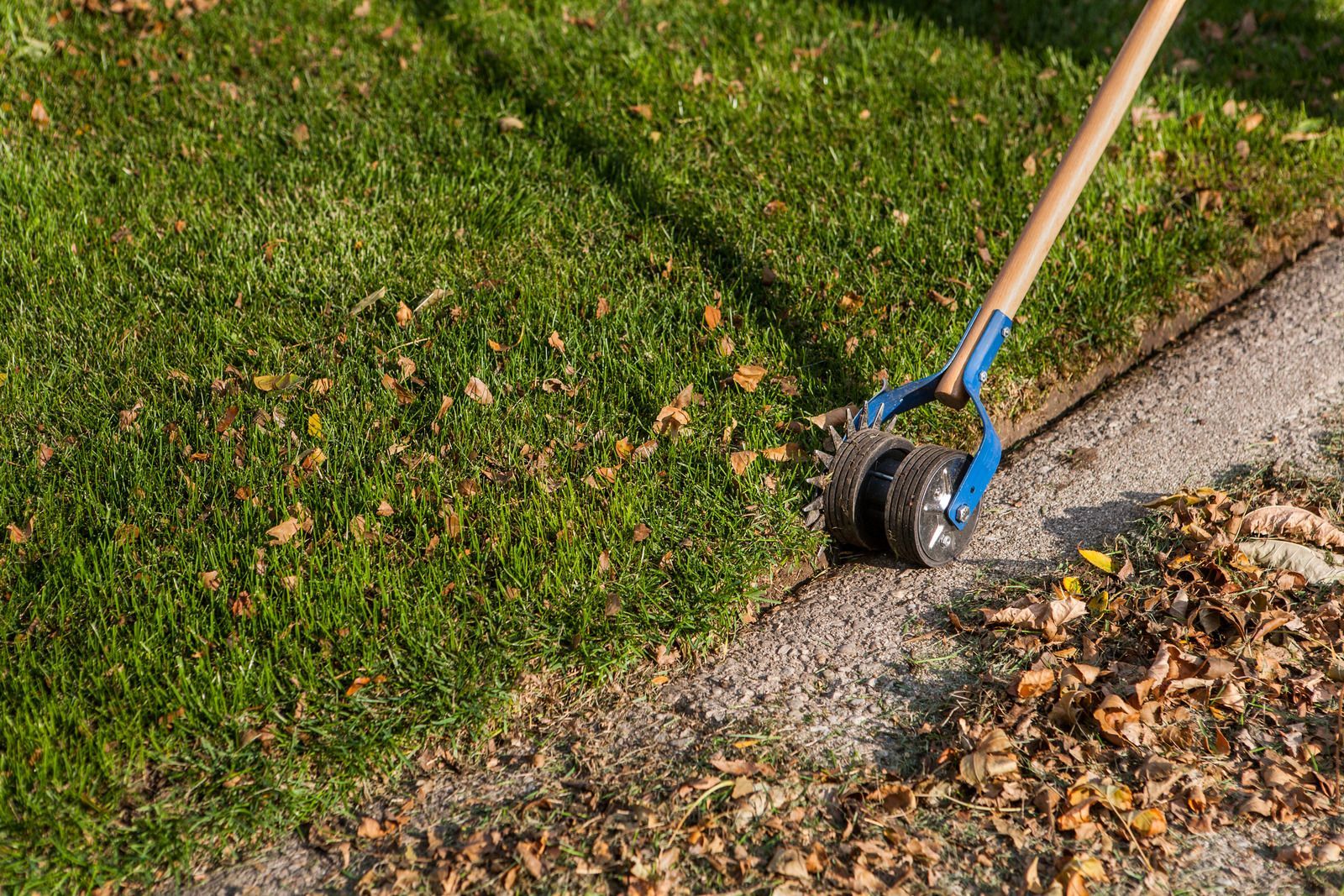
Trimming and Edging
The mower cannot reach the fence line, the mailbox post, the foundation, or the far side of the shed. String trimming handles those, and edging cuts a hard border where turf meets driveway, walkway, and patio so the lawn reads as finished rather than merely cut.
DEBRIS PICKUP
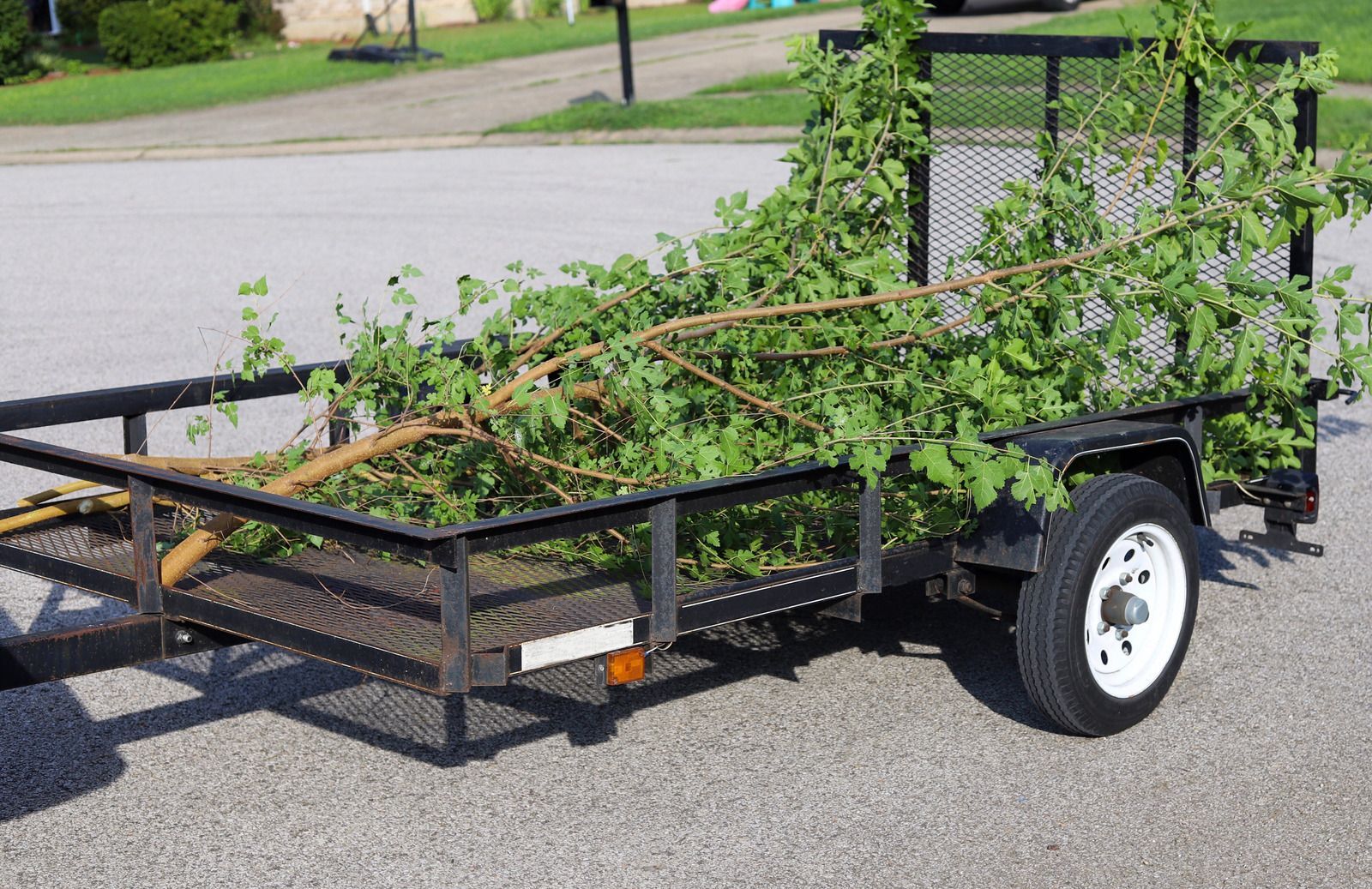
Leaf, Stick and Branch Removal
Storms drop material on a lawn all season, not just in October. Anything that would be hit by a mower deck or left to smother grass gets picked up before cutting starts, which protects both the equipment and the turf underneath it.
SEASON CHANGE
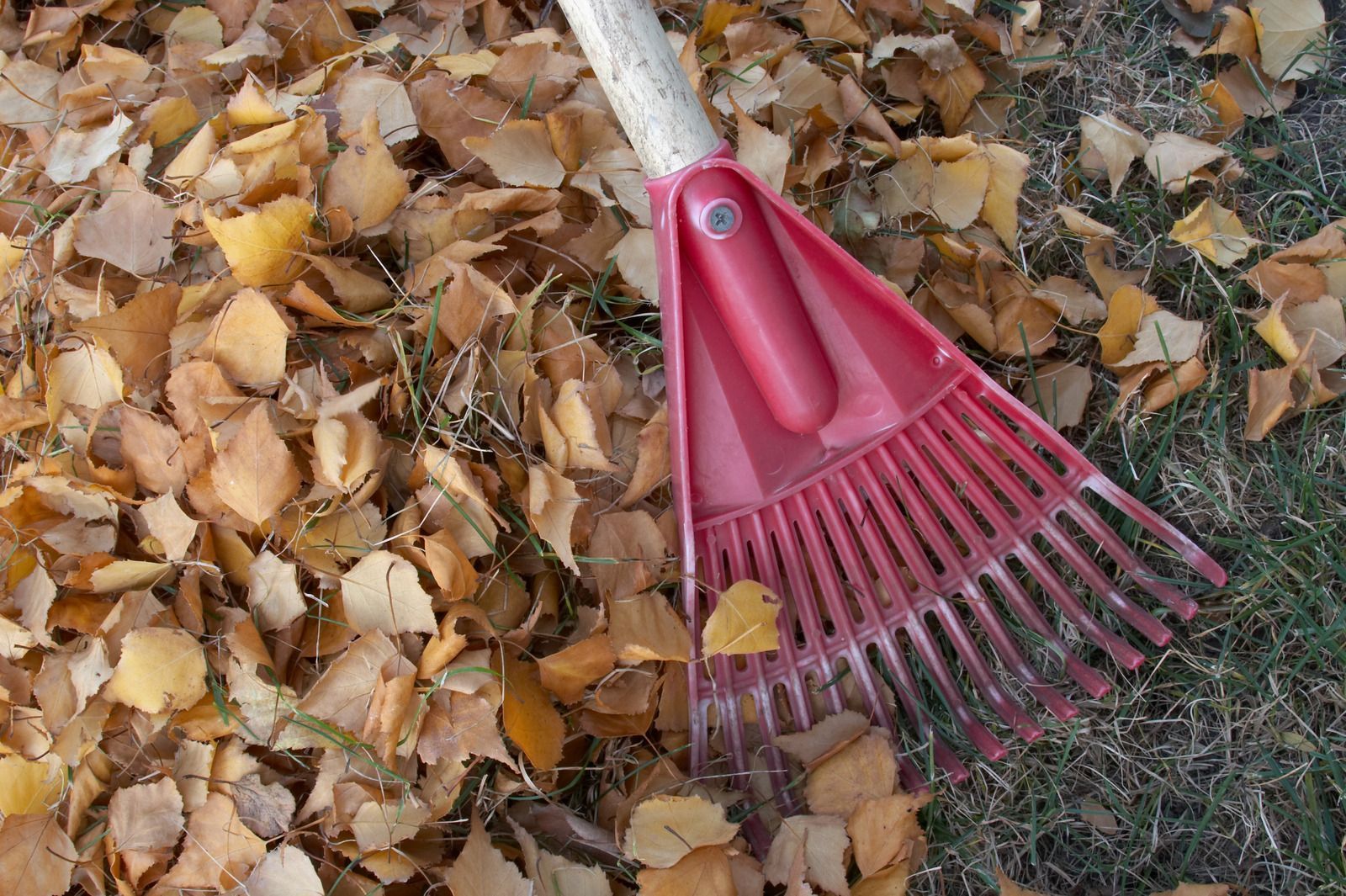
Spring and Fall Cleanups
Two larger visits bracket the mowing season. The fall pass clears leaves before snow presses them into a wet mat that invites disease, and the spring pass removes winter debris once the ground firms up enough to carry equipment without rutting the turf.
WINTER WORK
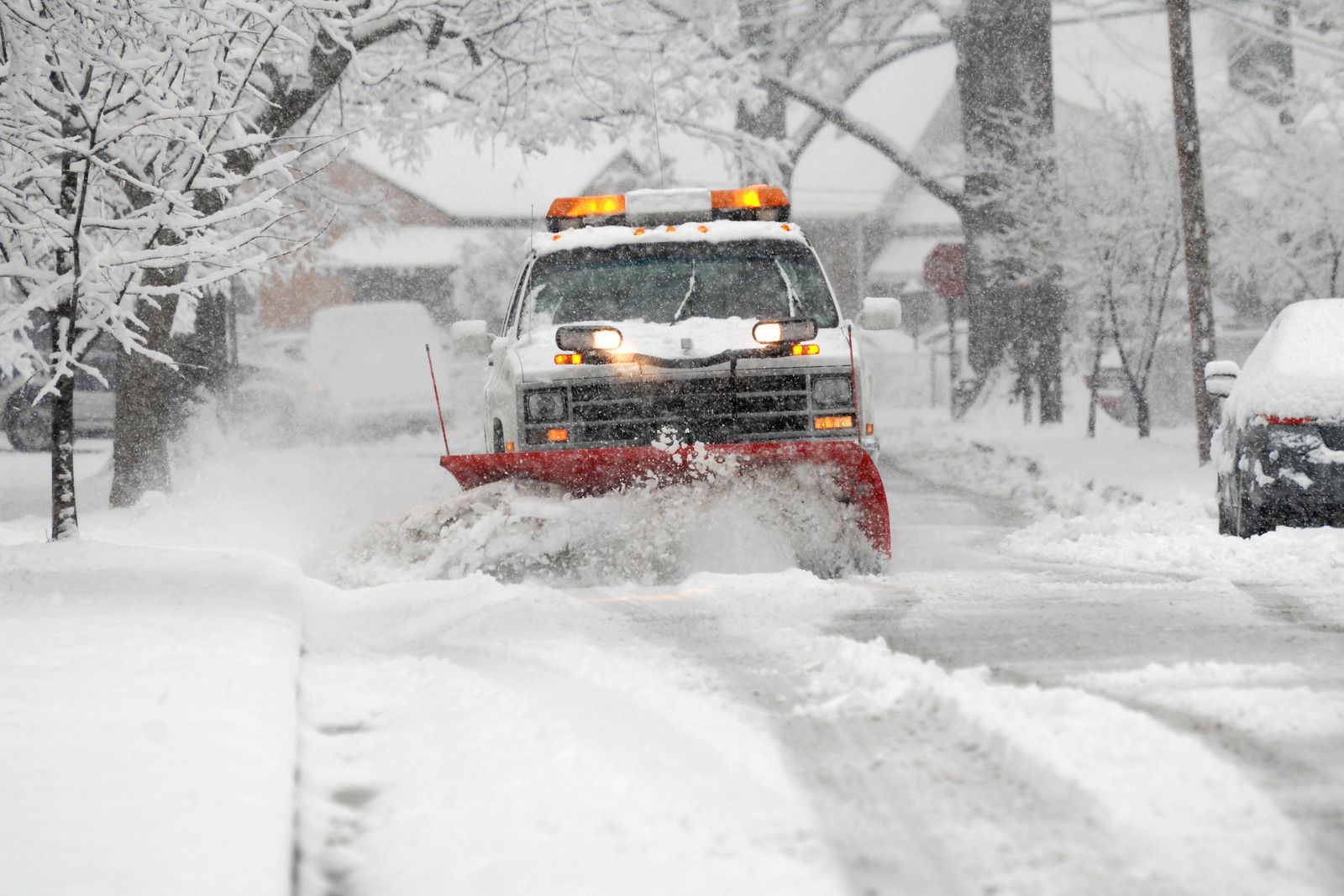
Snow Plowing and Clearing
The route does not stop in December. Driveways, walks, patios, and decks get cleared after a storm, with return passes during a long one, so the same company that knows your lawn is the one working around it in the snow.
➜ THE WORD ON OUR WORK
WHAT OUR CLIENTS SAY.
Long-running customers are the best evidence a lawn company can offer, and a good share of our route has stayed with us year after year. Reviews on our Google Business Profile come from homeowners across the area, and referrals from existing customers earn a discount.
How much water does a lawn need each week in summer?
Roughly an inch, delivered deeply rather than in daily sprinkles. Deep soaking pushes roots down where soil stays cooler, while frequent shallow watering keeps roots near the surface and makes a lawn more vulnerable to heat.
Is there a law limiting when lawn fertilizer can be applied in New York?
Yes. Under the state Nutrient Runoff Law, lawn fertilizer cannot be applied between December 1 and April 1. It also cannot be spread on driveways or sidewalks, and any spillage has to be swept up rather than hosed off.
Why is phosphorus restricted in New York lawn fertilizer?
Phosphorus running off lawns feeds algae in lakes and streams. State law bars phosphorus lawn fertilizer unless you are establishing a new lawn or a soil test shows a deficiency, so compliant products carry a zero as the middle number.
When is the best time to seed or overseed a lawn in this region?
Cornell Cooperative Extension puts the window at August 15 through September 15. Countryside Lawncare times late-season visits around it on Ballston Lake, NY lawns, because seedlings need warm soil, cool nights, and a long runway before October frost.
Why does grass stop growing in the middle of summer?
Cool-season grasses go dormant when soil heats up. Browning in late July is usually protective rather than fatal, and the lawn greens back up once temperatures fall and rain returns, provided it is not scalped while it is stressed.
When do white grubs do the most damage to a lawn?
Late summer, once eggs laid in early July hatch and the young grubs begin feeding on roots. Damage typically shows as spongy turf that pulls up like carpet, most visibly in August and September.
Does a soil test tell you anything useful?
Quite a lot. It shows pH and nutrient levels, and under New York law a test is the only way to justify applying phosphorus to an established lawn. Extension offices process them and results take about 2 weeks.
What makes Countryside Lawncare the right choice for lawn care in Ballston Lake, NY?
Countryside Lawncare covers every season in Ballston Lake, NY under one schedule, from the first spring cut through winter plowing, and works without contracts. You get a free estimate, a visit rhythm you set, and the freedom to change it.
➜ Common Questions
FREQUENTLY ASKED QUESTIONS.
Practical questions about keeping a lawn healthy in this climate, including the timing that matters most through the year and the state rules that apply to anyone treating turf in New York.
How much water does a lawn need each week in summer?
Roughly an inch, delivered deeply rather than in daily sprinkles. Deep soaking pushes roots down where soil stays cooler, while frequent shallow watering keeps roots near the surface and makes a lawn more vulnerable to heat.
Is there a law limiting when lawn fertilizer can be applied in New York?
Yes. Under the state Nutrient Runoff Law, lawn fertilizer cannot be applied between December 1 and April 1. It also cannot be spread on driveways or sidewalks, and any spillage has to be swept up rather than hosed off.
Why is phosphorus restricted in New York lawn fertilizer?
Phosphorus running off lawns feeds algae in lakes and streams. State law bars phosphorus lawn fertilizer unless you are establishing a new lawn or a soil test shows a deficiency, so compliant products carry a zero as the middle number.
When is the best time to seed or overseed a lawn in this region?
Cornell Cooperative Extension puts the window at August 15 through September 15. Countryside Lawncare times late-season visits around it on Ballston Lake, NY lawns, because seedlings need warm soil, cool nights, and a long runway before October frost.
Why does grass stop growing in the middle of summer?
Cool-season grasses go dormant when soil heats up. Browning in late July is usually protective rather than fatal, and the lawn greens back up once temperatures fall and rain returns, provided it is not scalped while it is stressed.
When do white grubs do the most damage to a lawn?
Late summer, once eggs laid in early July hatch and the young grubs begin feeding on roots. Damage typically shows as spongy turf that pulls up like carpet, most visibly in August and September.
Does a soil test tell you anything useful?
Quite a lot. It shows pH and nutrient levels, and under New York law a test is the only way to justify applying phosphorus to an established lawn. Extension offices process them and results take about 2 weeks.
What makes Countryside Lawncare the right choice for lawn care in Ballston Lake, NY?
Countryside Lawncare covers every season in Ballston Lake, NY under one schedule, from the first spring cut through winter plowing, and works without contracts. You get a free estimate, a visit rhythm you set, and the freedom to change it.
➜ HOW WE WORK
FROM FIRST WALK-THROUGH TO LAST PLOW, HERE IS HOW.
STEP 01
Walk the property with you
We look at the lot the way we will work it: total turf area, slope, shade, tree cover, border length, and anything a mower has to navigate around. You point out what bothers you about the yard now.
STEP 02
Put a number on the season
The estimate comes back free and itemized by service, so you can see what weekly mowing costs against biweekly, and what adding cleanups or plowing does to the total before you commit to any of it.
STEP 03
Set the rhythm
You choose the interval and the start date. We slot the property into a route with neighbors nearby, which keeps arrival windows tight and makes it easier to shift the schedule when weather forces a change.
STEP 04
Run the season
Cutting height set for the grass and the month, trimming and edging on every visit, clippings blown off hard surfaces, and debris cleared before the mower touches it. The same standard whether or not you are home.
STEP 05
Close out the growing year
Final cuts come down slightly to reduce matting under snow, then the fall cleanup pulls leaves off the turf before the first storm arrives. This is the visit that quietly decides how much repair work the following spring will need.
STEP 06
Keep going through winter
Plowing picks up where mowing left off. Driveways, walks, patios, and decks are cleared after storms, on the same no-contract terms, so nothing about your property goes unattended through the stretch between December and March.
➜ GET YOUR FREE ESTIMATE
TELL US ABOUT THE YARD AND WE WILL PRICE IT, FREE.
One conversation sets up an entire year of not thinking about the lawn. Send us the details through our contact page and we will walk the property, listen to what you want changed, and put a number to it.
WHAT YOUR ESTIMATE COVERS:
- A walk-through of the full property, at no charge
- Pricing broken out by service, not bundled
- Weekly and biweekly options side by side
- Seasonal cleanup and plowing costs included
- A start date that suits your growing season
- No contract and no obligation to proceed