➜ LAWN MOWING
LAWN MOWING IN Ballston Lake, NY
Turf specialists put the ceiling on a single cut at one third of the blade, and a lawn growing at May speed crosses that line in about 7 days. Countryside Lawncare mows on weekly or biweekly rounds that respect it, cutting Kentucky bluegrass and fescue at the 2 to 3 inch height Cornell Cooperative Extension recommends, trimming and edging every visit, and blowing every clipping off the drives and walks across Ballston Lake, NY and the towns around it.
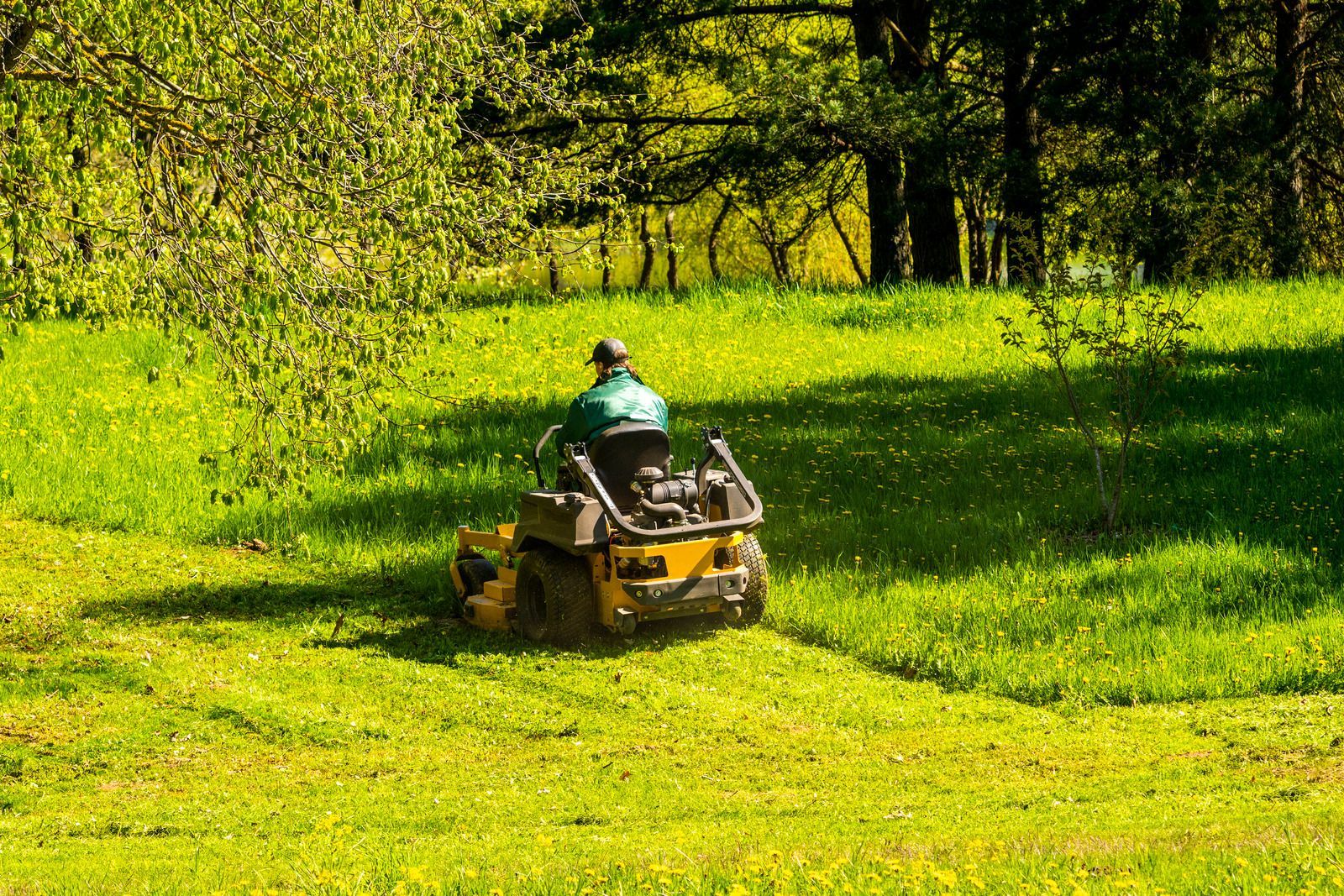
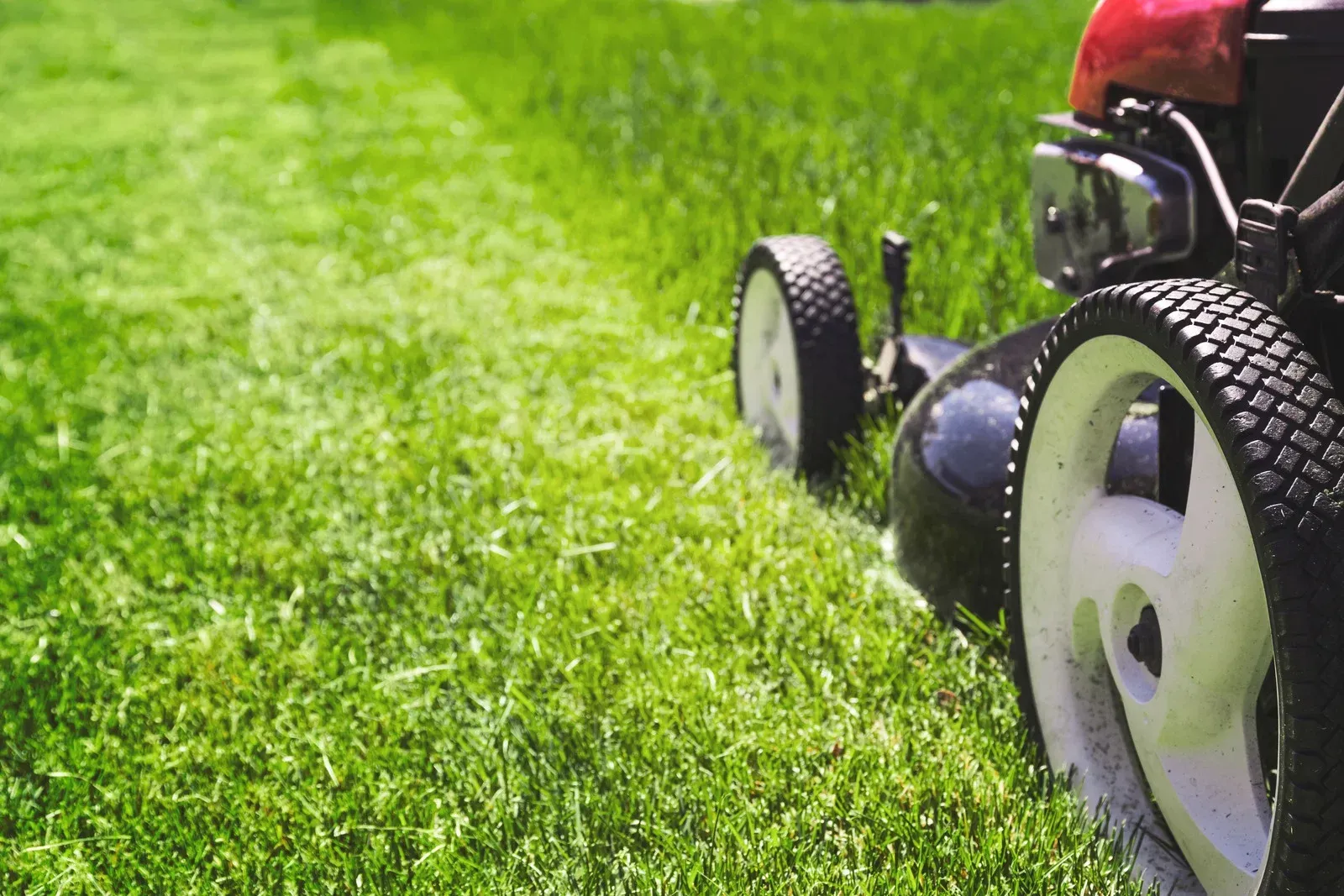
THE MOWER IS NOT THE HARD PART. THE TIMING IS.
Anybody can own a mower. What separates a good lawn from an average one is showing up before the grass has outgrown a single safe pass, and stopping short of the scalp that leaves a yard yellow for weeks afterward. Growth is not steady either. It races in May and June, stalls in the heat, then picks up again in September.
Our route bends to that curve rather than fighting it. The interval that works in June is not the interval that works in August, and we will tell you when yours should change.
- Cuts scheduled around growth, not the calendar
- Height set for the grass type and the month
- Trimming and edging included every visit
- Skip a week whenever growth stalls
➜ LAWN MOWING
A CUT LAWN AND A MOWED LAWN ARE NOT THE SAME THING.
A mower alone leaves a ring of tall grass around every post, tree, and downspout, a shaggy lip where turf spills onto the driveway, and a scatter of clippings across the walk. That is a cut lawn. A mowed lawn has all of it handled in the same visit, which is why we treat trimming, edging, and blowdown as part of the job rather than an upsell for people who ask.
SPRING GROWTH HERE OUTRUNS A 14-DAY GAP.
Between the last frost in mid-May and the end of June, cool-season grass in Saratoga County can add an inch and a half in a week. Stretch the interval to 14 days in that stretch and the only way to get back to a normal height is to remove far more than a third of the blade, which stresses the roots and leaves clumps behind.
WET MAYS AND DRY JULYS NO LONGER SURPRISE US.
A soaking spring means route days slide and lawns get cut wet or not at all, and a dry July means half the properties should be skipped rather than mowed. Both cost a company money if it insists on a rigid calendar. Over 12 years we have learned to read the week ahead and move the route instead of forcing it, which is why your lawn gets cut when cutting helps it.
WHY CHOOSE US FOR LAWN MOWING.
THE RIGHT HEIGHT, EVERY TIME
Grass cut at 2 to 3 inches shades its own roots, holds moisture longer and crowds out weeds without any help. A lawn scalped to an inch does the opposite, and it takes weeks to recover from a single bad pass.
BORDERS THAT LOOK DELIBERATE
Trimming around posts, trees, and foundations, and a cut edge along the driveway and walk. It is the part of a mow that people actually see from the street, and it is included rather than quoted separately.
CLIPPINGS THAT FEED THE LAWN
Returning clippings rather than bagging them cuts a lawn's nitrogen and potassium needs by roughly 30 percent. They break down in days, they do not cause thatch, and they save you a trip to the curb.
A SCHEDULE THAT MOVES WITH YOU
Weekly through the growth surge, biweekly when things slow, paused entirely when a dry stretch stops the grass in its tracks. You are never paying for a cut the lawn did not need in the week it was scheduled.
NOTHING SIGNED, NOTHING OWED
Pay-as-you-go from the very first visit. There is no season minimum, no auto-renewal, no cancellation notice period, and no awkward conversation if you decide midway through August to take the mower back yourself.
HARD SURFACES LEFT CLEAN
Clippings blown off the driveway, the walk, and the patio before we pull away. Grass left on concrete stains the surface, tracks into the house on shoes, and washes straight into storm drains during the next heavy rain.
➜ WHAT WE CUT
OUR LAWN MOWING WORK
Six parts to a mowing visit, and all six happen every time rather than on the visits where somebody remembers. The interval is yours to set and yours to change.
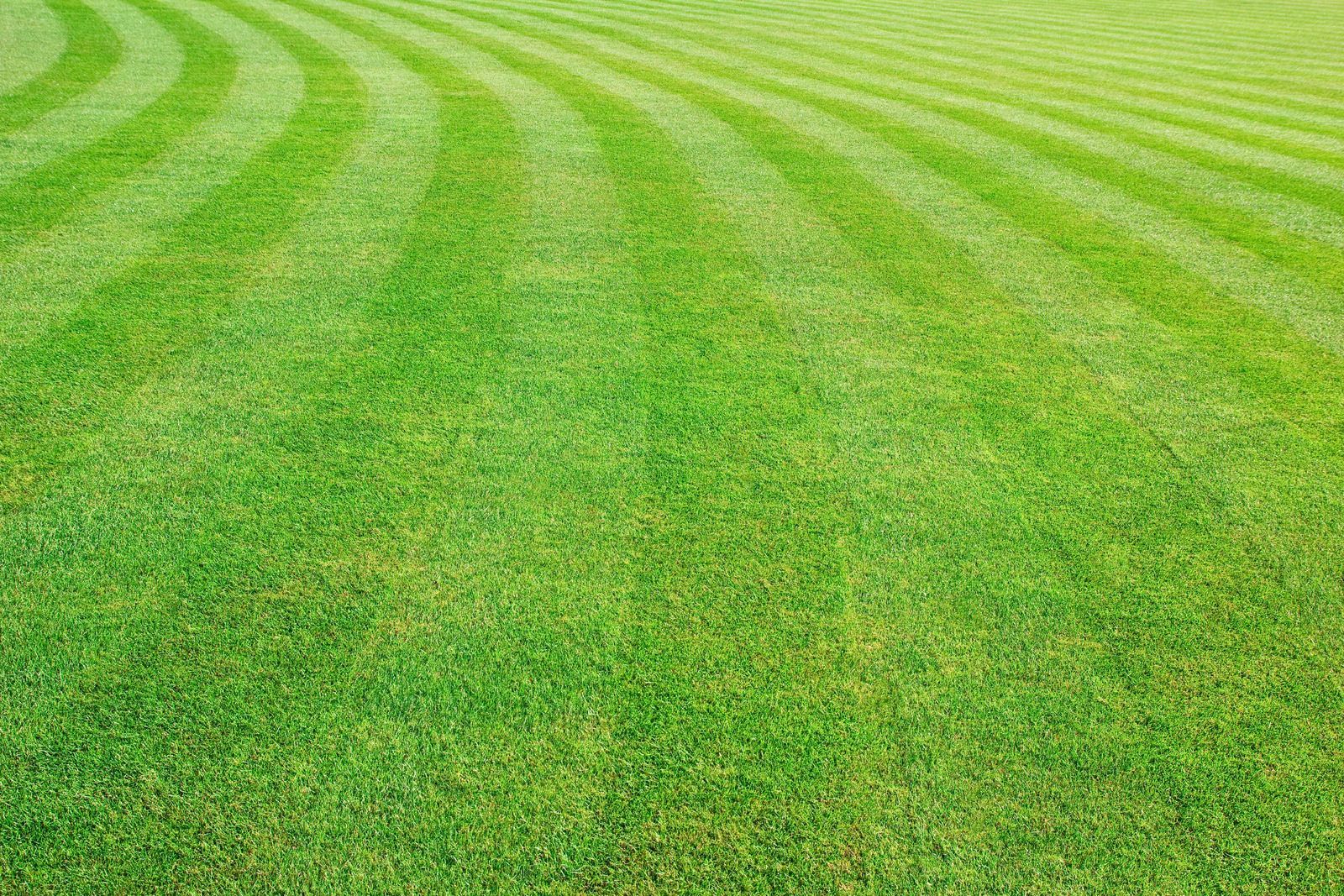
WEEKLY CUTS
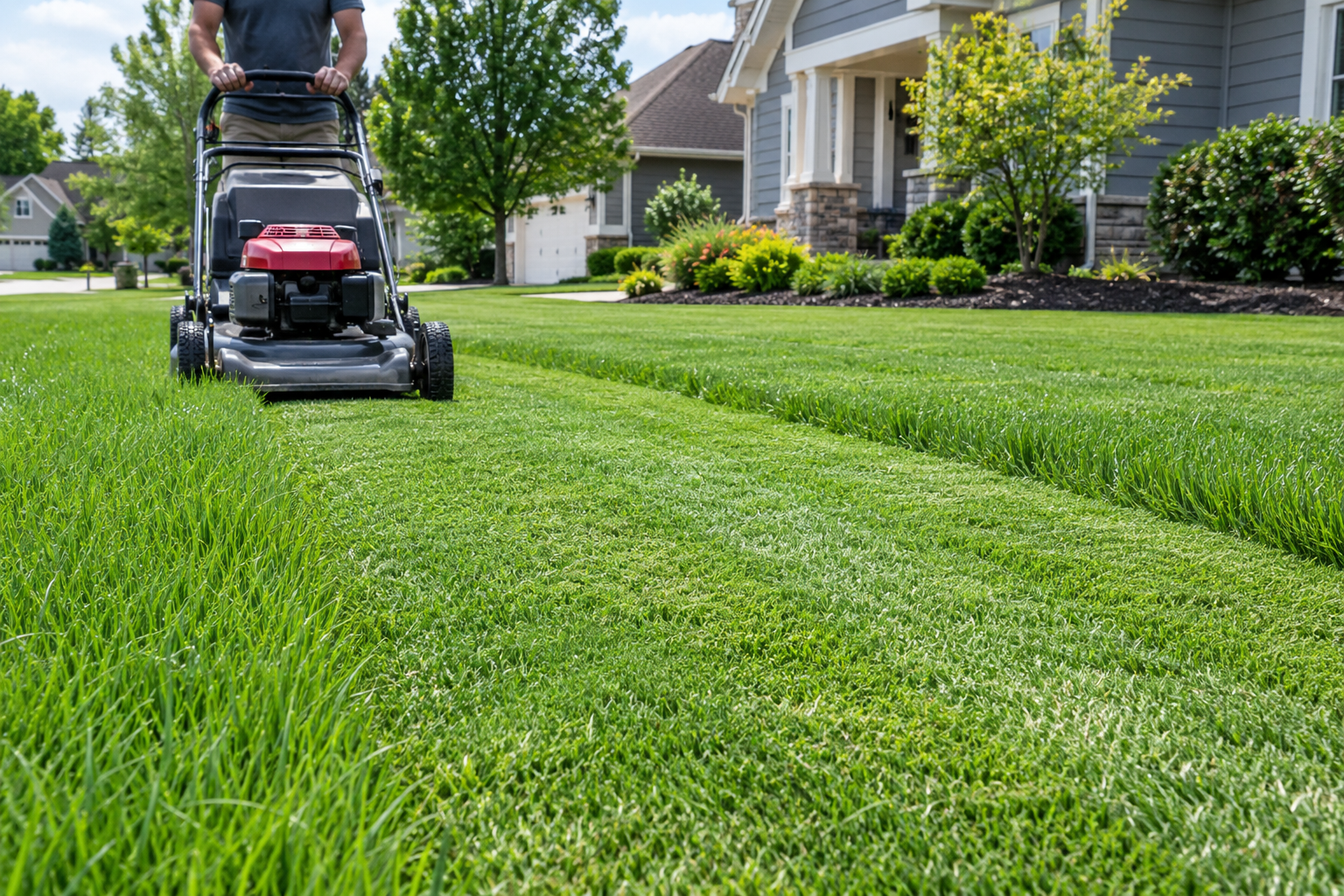
Weekly Mowing Service
The standard through the growth surge from May into early July and again in September. Spacing of 7 days keeps every pass inside the one-third rule, so the lawn never takes a shock cut and color stays consistent from the road to the back fence.
EVERY OTHER WEEK
Biweekly Mowing Service
A fit for shaded properties, slower-growing lawns and the mid-summer stretch when heat pushes cool-season turf toward dormancy. It costs less across a season, and on the right property the finished result is indistinguishable from weekly cutting at the same height.
TRIM WORK
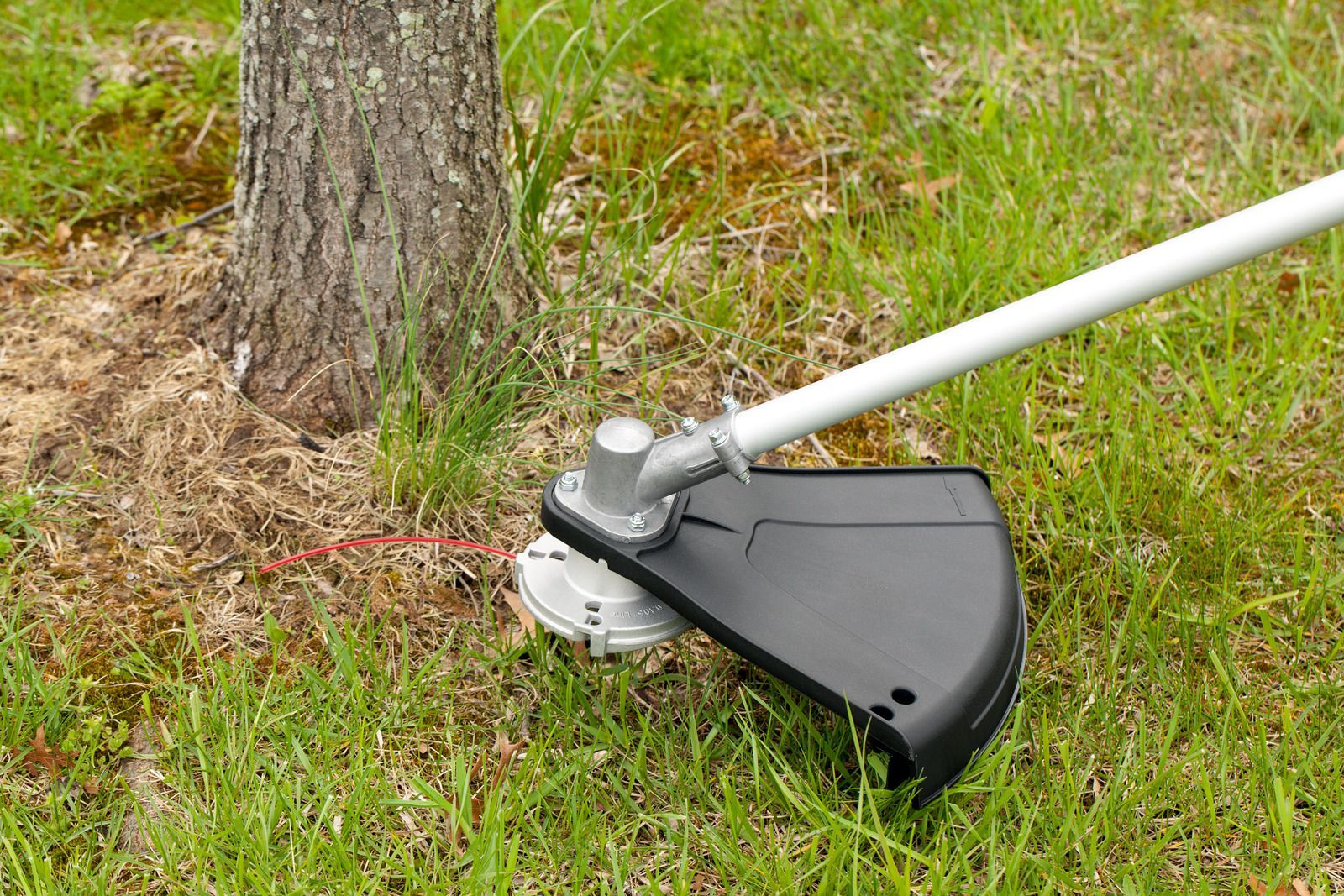
String Trimming Around Obstacles
Fence posts, mailbox bases, tree rings, downspouts, air conditioner pads, play sets, and the tight side of a shed. Everywhere the mower deck cannot reach gets trimmed down to match the cut height, so nothing is left standing once the equipment is loaded.
HARD EDGES
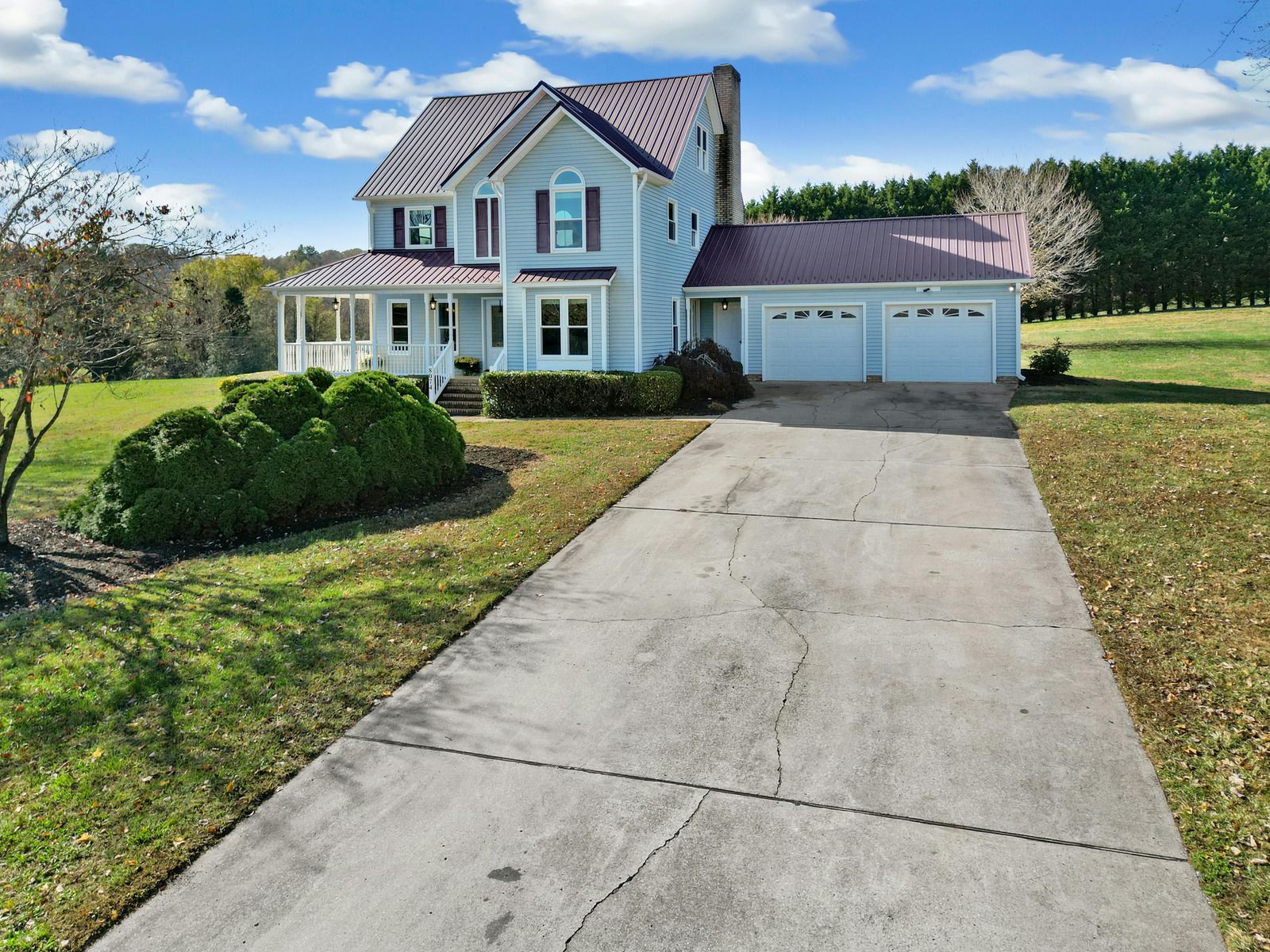
Driveway and Walkway Edging
A clean cut line where turf meets concrete, asphalt, or pavers. Edging stops grass creeping over the surface, keeps the driveway looking its full width, and gives the property the finished look people associate with professional care.
AFTER THE CUT
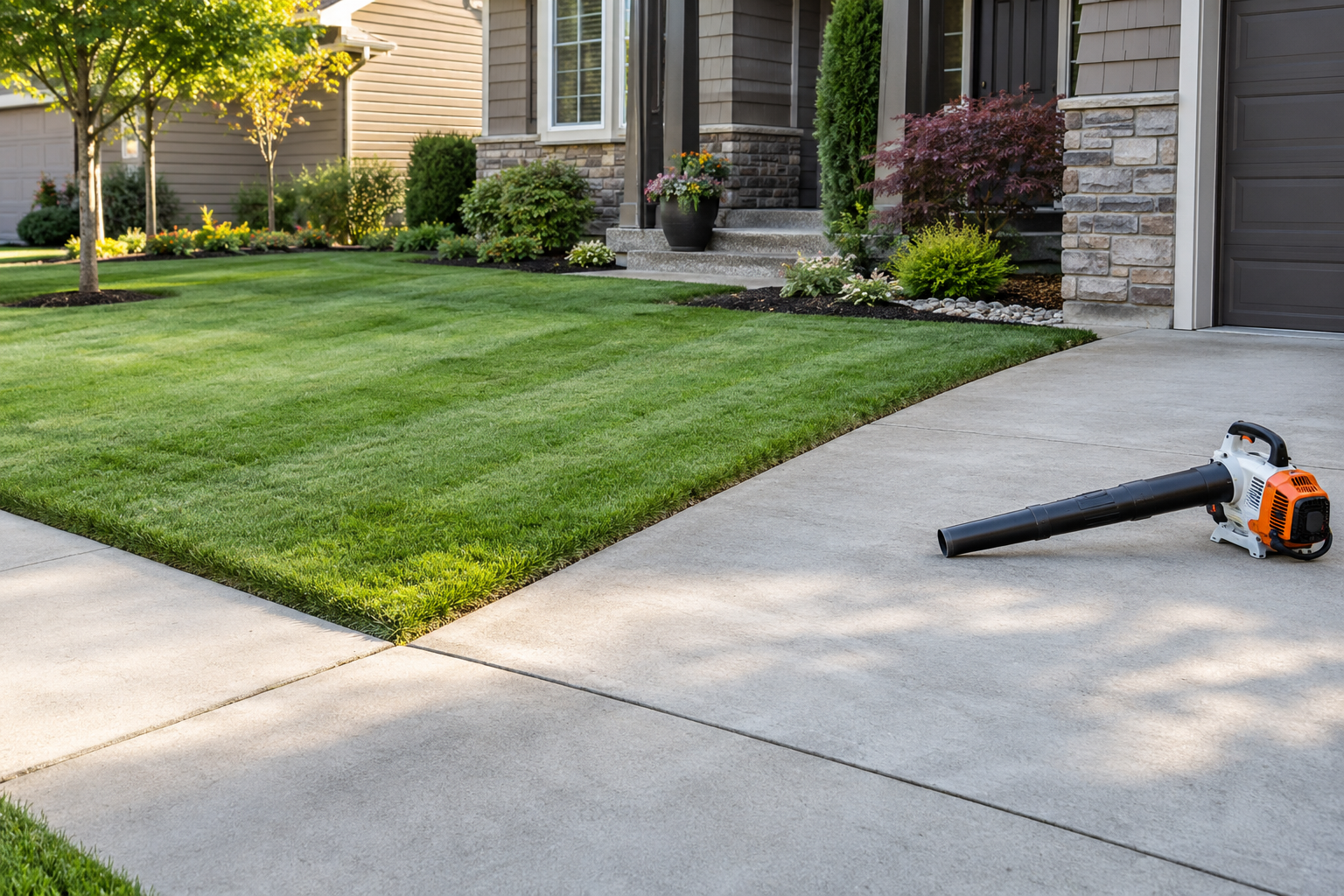
Clipping Cleanup and Blowdown
Every hard surface gets blown clean before we leave. Drives, walks, steps, and patios go back to bare, which keeps cut grass out of the house, off the storm drain, and away from the pool skimmer if you have one.
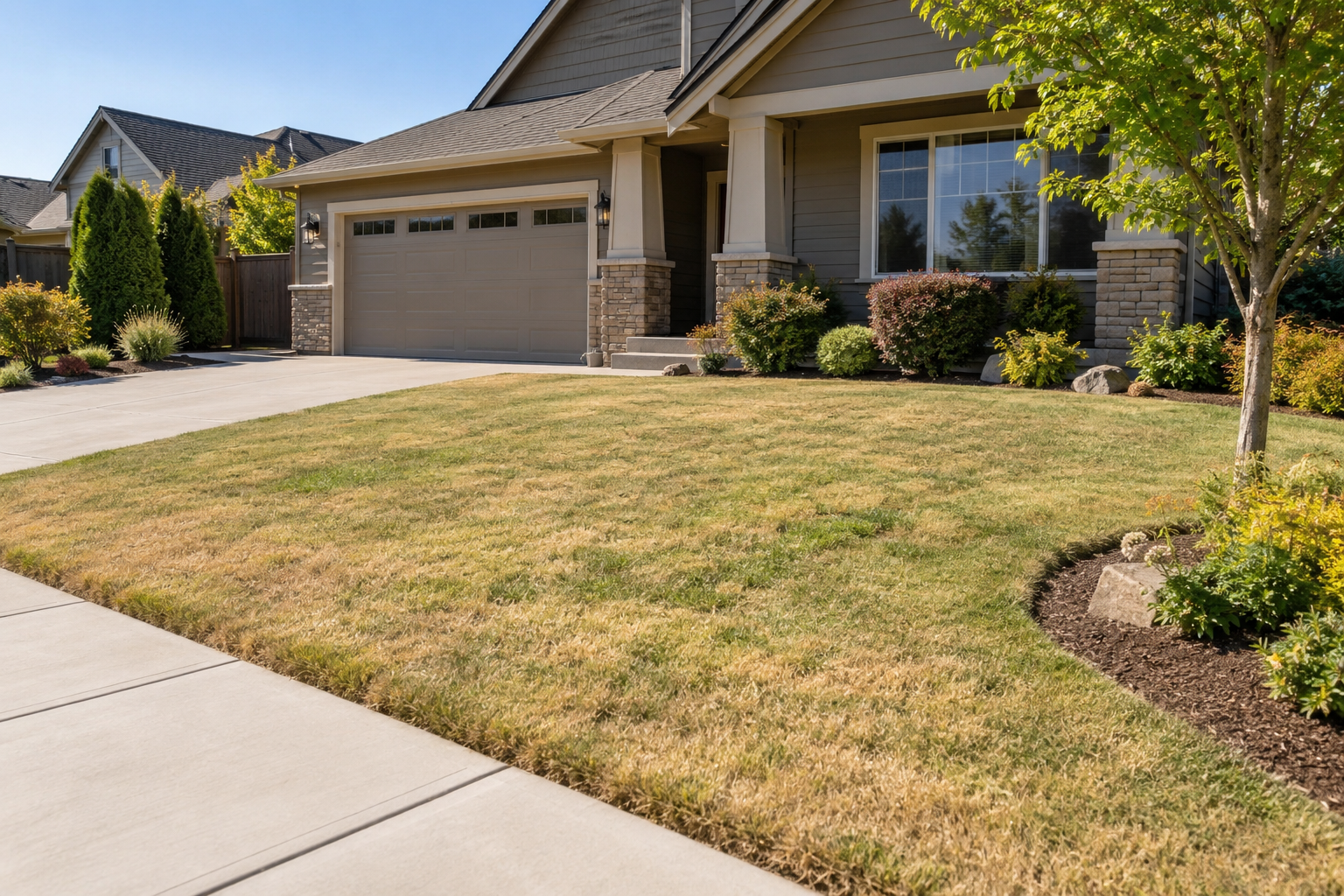
NO LOCK-IN
Skip Weeks and Cancellations
Growth stalls during a drought and a scheduled cut becomes pointless. Tell us and we skip it, no charge. Change your mind about the whole arrangement in August and there is nothing to unwind, because there was nothing signed.
➜ THE WORD ON OUR WORK
WHAT OUR CLIENTS SAY.
The mowing route is the part of our work neighbors see every week, and most new customers find us because they watched us cut the yard two doors down. Reviews sit on our Google Business Profile, and existing customers earn a discount for referrals.
How much water does a lawn need each week in summer?
Roughly an inch, delivered deeply rather than in daily sprinkles. Deep soaking pushes roots down where soil stays cooler, while frequent shallow watering keeps roots near the surface and makes a lawn more vulnerable to heat.
Is there a law limiting when lawn fertilizer can be applied in New York?
Yes. Under the state Nutrient Runoff Law, lawn fertilizer cannot be applied between December 1 and April 1. It also cannot be spread on driveways or sidewalks, and any spillage has to be swept up rather than hosed off.
Why is phosphorus restricted in New York lawn fertilizer?
Phosphorus running off lawns feeds algae in lakes and streams. State law bars phosphorus lawn fertilizer unless you are establishing a new lawn or a soil test shows a deficiency, so compliant products carry a zero as the middle number.
When is the best time to seed or overseed a lawn in this region?
Cornell Cooperative Extension puts the window at August 15 through September 15. Countryside Lawncare times late-season visits around it on Ballston Lake, NY lawns, because seedlings need warm soil, cool nights, and a long runway before October frost.
Why does grass stop growing in the middle of summer?
Cool-season grasses go dormant when soil heats up. Browning in late July is usually protective rather than fatal, and the lawn greens back up once temperatures fall and rain returns, provided it is not scalped while it is stressed.
When do white grubs do the most damage to a lawn?
Late summer, once eggs laid in early July hatch and the young grubs begin feeding on roots. Damage typically shows as spongy turf that pulls up like carpet, most visibly in August and September.
Does a soil test tell you anything useful?
Quite a lot. It shows pH and nutrient levels, and under New York law a test is the only way to justify applying phosphorus to an established lawn. Extension offices process them and results take about 2 weeks.
What makes Countryside Lawncare the right choice for lawn care in Ballston Lake, NY?
Countryside Lawncare covers every season in Ballston Lake, NY under one schedule, from the first spring cut through winter plowing, and works without contracts. You get a free estimate, a visit rhythm you set, and the freedom to change it.
➜ Common Questions
FREQUENTLY ASKED QUESTIONS.
What people ask before handing over the mowing, from cutting height and frequency to whether clippings should be bagged and what happens after a week of rain.
How often should a lawn be mowed in peak growing season?
Every 5 to 7 days through May and June, when cool-season grass grows fastest. Frequency matters less than the rule behind it: mow often enough that no single cut takes more than a third of the blade.
What is the one-third rule for mowing?
Never remove more than one third of the grass blade in a single cut. Taking more strips away the leaf area the plant uses to feed itself, which stalls root growth and leaves the lawn open to weeds and heat stress.
How short should cool-season grass be cut?
Cornell Cooperative Extension recommends 2 to 3 inches for Kentucky bluegrass and fine fescue, and Countryside Lawncare holds to that range on Ballston Lake, NY lawns. Taller cutting shades soil, holds moisture and starves weed seeds of light.
Should grass clippings be bagged or left on the lawn?
Left on the lawn. Returning clippings reduces a lawn's nitrogen and potassium requirement by around 30 percent. They are mostly water, they break down within days, and contrary to the old belief they do not create thatch.
Is it bad to mow wet grass?
Generally, yes. Wet blades bend instead of standing, so the cut is uneven, and the clippings clump and mat on the surface. Wet soil also rutts under wheels, which leaves tracks that last the rest of the season.
How often do mower blades need sharpening?
Roughly every 20 to 25 hours of cutting. A dull blade tears rather than slices, and torn tips brown within a day or two, which is why a lawn can look faded even when it has just been mowed.
Does changing the mowing direction actually matter?
It does. Cutting the same line every week trains grass to lean and compacts wheel tracks into the soil. Alternating direction encourages upright growth, spreads the wear, and gives the lawn a more even appearance.
Why do homeowners in Ballston Lake, NY hand their mowing to Countryside Lawncare?
Countryside Lawncare has mowed lawns across Ballston Lake, NY for 12 years, on weekly or biweekly rounds with trimming, edging, and blowdown built into every visit. Nothing is signed, and you can pause or stop whenever you like.
➜ HOW WE WORK
FROM FIRST LOOK TO FINISHED EDGE, HERE IS HOW.
STEP 01
Measure the property honestly
Turf area, slope, tree count, obstacle density, and total border length. Two lots of the same size can differ by half in mowing time, and pricing that ignores obstacles is pricing that gets revised later.
STEP 02
Recommend an interval
We say which interval the lawn actually needs rather than which one bills more. Shaded, slow lawns do fine biweekly. Open, irrigated lawns in June need weekly, and we will tell you plainly which yours is.
STEP 03
Set the cutting height
Height gets matched to the grass type and adjusted through the year, taller in the heat of July, slightly lower for the last cuts of fall so wet growth does not mat down under snow cover.
STEP 04
Mow, trim, and edge
The full visit runs in one pass: deck across the open turf, string trimmer around every obstacle, a cut edge along the hard surfaces, then blowdown. Direction alternates week to week so the lawn does not learn to lean.
STEP 05
Leave the property clean
Hard surfaces cleared, gates closed, nothing left behind for you to sweep. If something on the lawn was in the way, we move it and put it back rather than mowing a circle around it.
STEP 06
Adjust as the season shifts
Growth slows, weather turns, plans change. The interval moves with any of those, and it takes one message. That flexibility is the whole point of running without a contract in the first place.
➜ GET YOUR FREE ESTIMATE
FIRST CUT STARTS WITH A LOOK AT THE LOT, FREE.
Tell us the address and what has been frustrating you about the yard. We will walk it, price weekly and biweekly side by side, and let you pick. Reach us through the contact page whenever you are ready.
WHAT YOUR MOWING QUOTE COVERS:
- A no-charge walk-through of the whole property
- Weekly and biweekly pricing shown together
- Trimming, edging, and blowdown on every visit
- A cutting height matched to your grass
- A start date that fits your season
- No contract, no minimum, no cancellation fee